Driving Without Insurance in Florida: Consequences
Florida Law, Auto Insurance, Driving Consequences
What Happens If You Drive Without Insurance in Florida?
Florida treats driving without insurance as a serious violation, not a minor paperwork issue. If you live in the Sunshine State and own a car, knowing what can happen if you drive uninsured can save you from fines, suspended driving privileges, and long‑term financial headaches.
Florida’s Auto Insurance Requirements in Plain Language
Before looking at the penalties, it helps to understand what Florida actually requires. Florida is a no‑fault insurance state. That means, after most crashes, each driver first uses their own insurance to pay for medical bills, regardless of who caused the accident.
To register and legally drive a vehicle with at least four wheels in Florida, you must carry:
Personal Injury Protection (PIP) – minimum $10,000 in coverage for your own medical expenses and certain related costs after a crash, no matter who was at fault.
Property Damage Liability (PDL) – minimum $10,000 to pay for damage you cause to someone else’s vehicle or property.
These are just the legal minimums. Many drivers choose higher limits and add optional coverages, but at the very least, PIP and PDL must be active on your vehicle at all times while your car is registered in Florida.
What Happens the Moment You Drive Without Insurance?
In Florida, the risk starts the instant your policy lapses or is canceled while your vehicle is still registered. Even if you are not pulled over right away, you are technically breaking the law by driving an uninsured, registered vehicle on public roads. The state and your insurer both keep track of your coverage status, and gaps rarely go unnoticed for long.
Insurance Lapse Notices and DMV Action
When your auto policy is canceled or not renewed, your insurance company must notify the Florida Department of Highway Safety and Motor Vehicles (DHSMV). If there is no new policy on file, the state assumes you are driving without insurance. You may receive a notice warning you to provide proof of new coverage by a certain date. Ignore that notice, and the consequences escalate quickly.
License and Registration Suspension: The First Big Consequence
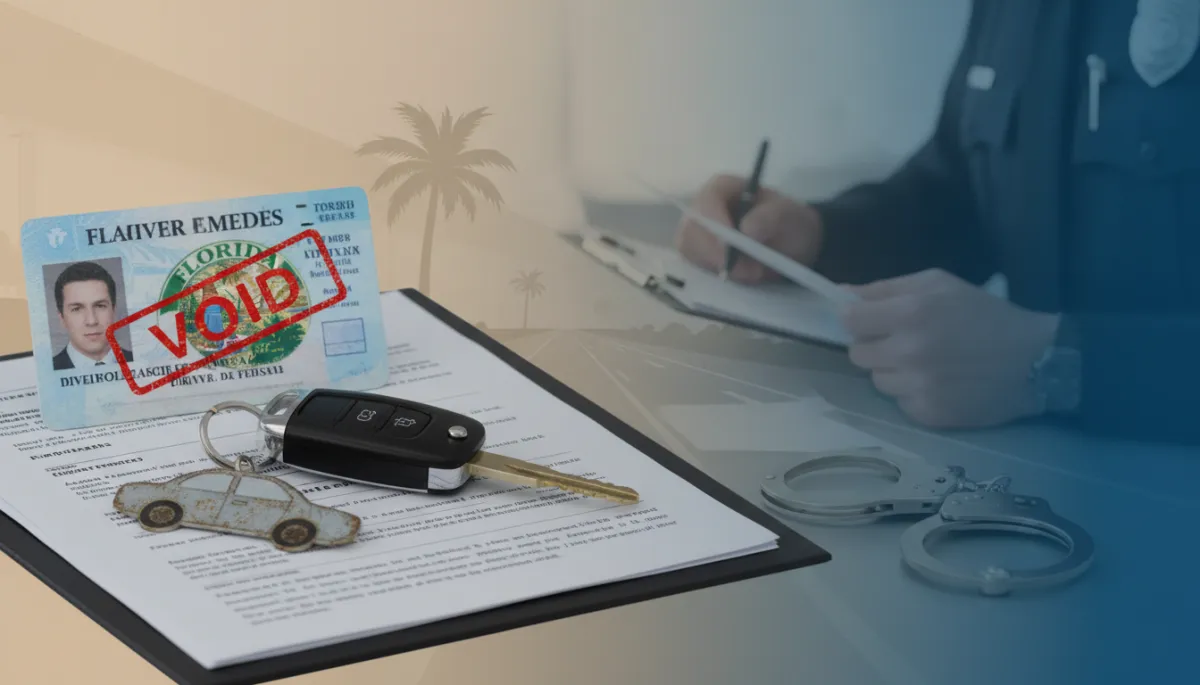
One of the most immediate penalties for driving without insurance in Florida is the suspension of your driver’s license, license plate, and vehicle registration. The DHSMV can suspend these for up to three years if you cannot show proof of valid insurance by the deadline listed in your notice or at the time you are cited by law enforcement.
To get your driving privileges back, you must:
Provide proof of a new Florida auto insurance policy that meets the minimum PIP and PDL requirements, and
Pay a reinstatement fee, which typically ranges from about $150 to $500 depending on how many times you have violated the law.
Until you do both, you are not legally allowed to drive. If you are caught driving while your license is suspended for lack of insurance, you could face additional criminal charges and even more severe penalties.
What If You Are Pulled Over Without Insurance?
A routine traffic stop can quickly turn costly if you do not have proof of insurance. In Florida, law enforcement officers can verify coverage electronically, but you are also expected to carry a current insurance ID card (physical or digital) and present it when asked.
If you have insurance but cannot show proof at the time of the stop, you may receive a citation that can often be dismissed or reduced if you later show valid proof that was in effect on that date.
If you do not have insurance at all, you can be cited, and the officer’s report may trigger the DHSMV to suspend your license and registration. You may also face fines on top of reinstatement fees.
💡 Pro Tip: Keep a digital copy of your insurance card on your phone and a printed copy in your glove box so you are never without proof if you are stopped.
The Financial Fallout If You Cause a Crash While Uninsured
Losing your license and paying reinstatement fees is serious, but the biggest risk of driving without insurance is financial. If you cause a crash while uninsured, you are personally responsible for the damage you cause. That can include:
Repairs or replacement of the other driver’s vehicle
Damage to other property, such as fences, buildings, or road signs
The other driver’s medical bills and lost wages, especially if the crash is serious
Without insurance, those costs come directly out of your pocket. The other driver (or their insurance company) can sue you to recover their losses. Court judgments can lead to wage garnishment, liens on your property, and years of financial stress. A single major crash can be financially devastating, especially if multiple people are injured.
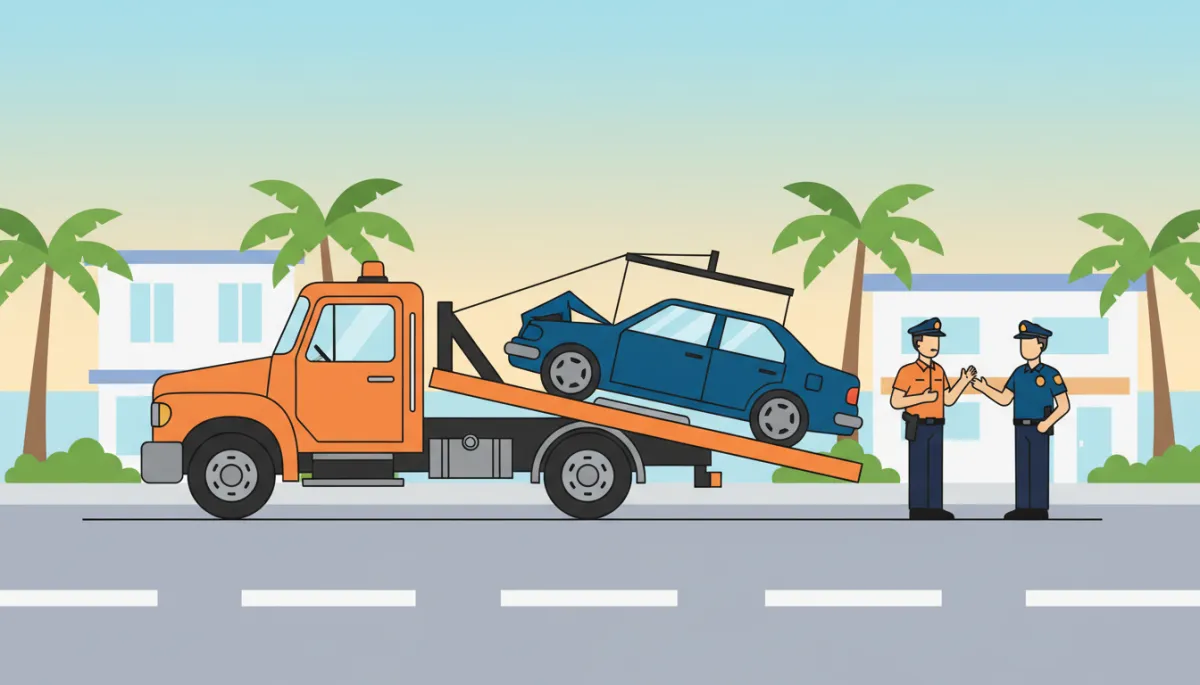
One uninsured crash can cost far more than years of paying premiums.
SR‑22 or FR‑44: Extra Requirements After Serious Violations
In some situations, such as causing a serious crash without insurance or being convicted of certain traffic offenses, Florida may require you to file special financial responsibility forms like an SR‑22 or FR‑44. These are not types of insurance but certificates your insurer files with the state to prove you carry the required coverage limits for a set period of time, often three years or more.
Policies with SR‑22 or FR‑44 filings are usually more expensive because the state considers you a higher‑risk driver. This is another way driving without insurance can raise your costs long after the initial violation.
Long‑Term Costs: Higher Premiums and Limited Options
Even if you avoid a crash, a gap in coverage or a suspension for driving without insurance can follow you for years. When you shop for a new policy, insurers will typically ask about any lapses in coverage and review your driving record. A history of driving uninsured often leads to:
Higher premiums because you are viewed as a higher‑risk customer
Fewer company choices, as some insurers may decline to cover you at all
Larger upfront payments, such as higher down payments or shorter payment plans
In other words, trying to save money by skipping insurance can actually make your future insurance much more expensive and harder to get. For many drivers, the long‑term financial impact is far greater than the cost of maintaining basic coverage from the start.
Can You Just Cancel Insurance if You Are Not Driving?
Some Florida drivers assume they can save money by canceling insurance during a period when they do not plan to drive much. However, if your vehicle remains registered in Florida, you are required to maintain continuous coverage. Canceling your insurance without surrendering your license plate and registration can still lead to suspension and reinstatement fees, even if the car never leaves the driveway.
If you truly plan to take a vehicle out of use for a while, speak with the DHSMV about properly turning in your plate and discuss storage or comprehensive‑only options with your insurer. Do not simply let the policy lapse and hope no one notices.
Practical Ways to Stay Covered and Avoid Penalties
If cost is the main reason you are tempted to drive without insurance, there are safer ways to manage your budget without risking suspension or financial ruin. Consider:
Shopping around with multiple insurers for better rates or discounts for safe driving, bundling, or good credit.
Adjusting your coverage while keeping at least the legal minimums, such as raising deductibles to lower your premium.
Using automatic payments or reminders so you never miss a due date and accidentally let your policy lapse.
📌 Key Takeaway: If you cannot afford your current policy, work with your insurer to adjust it—do not simply cancel and keep driving.
The Bottom Line: Driving Uninsured in Florida Is Not Worth the Risk
Driving without insurance in Florida can seem like an easy way to save money in the short term, but the potential consequences are severe. Suspension of your license and registration, hefty reinstatement fees, higher future premiums, and the risk of being personally responsible for tens of thousands of dollars after a crash all make going uninsured a very expensive gamble.
The safest and smartest choice is to maintain at least the required PIP and property damage liability coverage at all times while your vehicle is registered. If you are unsure whether your current policy meets Florida’s requirements—or if you are worried about a possible lapse—contact your insurance company or a licensed agent right away. A brief conversation now can prevent months or even years of legal and financial trouble later.
Laws and requirements can change, and every driver’s situation is unique. For specific guidance about your coverage, your driving record, or a recent citation, consider speaking with an insurance professional or an attorney familiar with Florida traffic and insurance law. Staying informed—and staying insured—is your best protection on Florida’s roads.
