Florida Home Insurance & Hurricane Coverage
Home Insurance, Hurricanes, Florida
Does Home Insurance Cover Hurricane Damage in Florida?
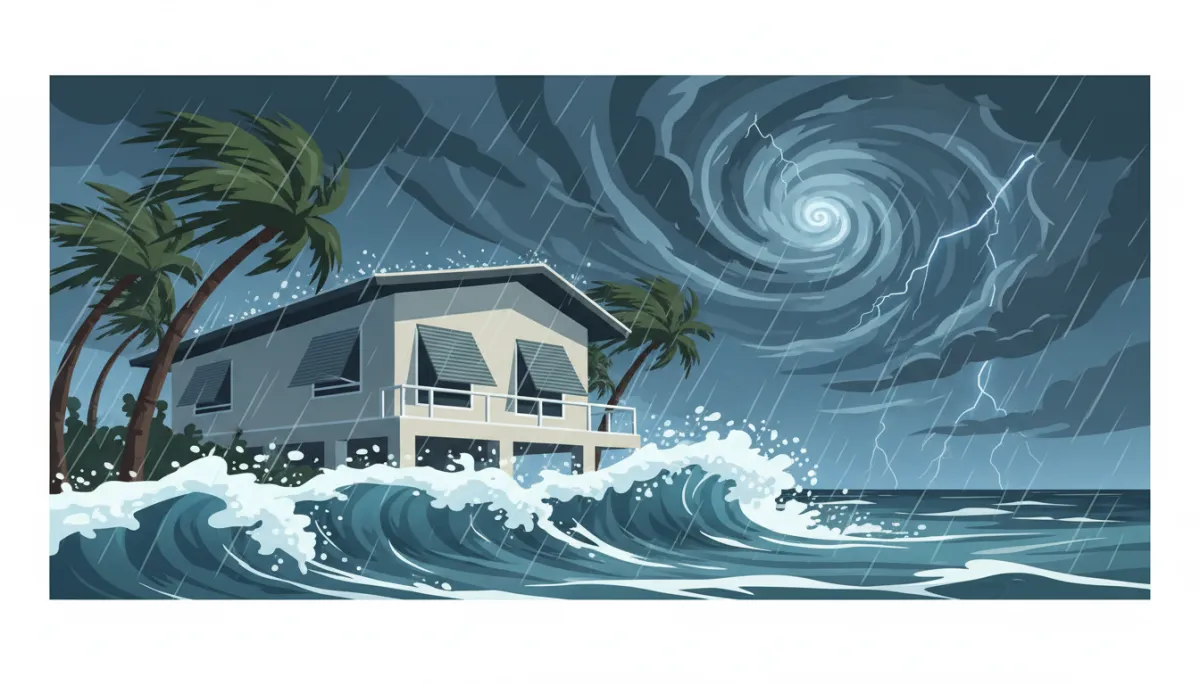
If you own a home in Florida, hurricanes aren’t an abstract news story—they’re a yearly reality. Understanding exactly what your home insurance does (and doesn’t) cover when a storm hits can be the difference between a manageable repair bill and a financial nightmare. This guide breaks down Florida hurricane coverage in plain language so you can protect your home and your savings.
The Short Answer: Yes for Wind, No for Flood
For most Florida homeowners with a standard HO‑3 policy, hurricane wind damage is covered, but flood and storm surge are not. That means:
Damage from wind—like shingles ripped off, broken windows, or a tree crashing through your roof—is typically covered, subject to your hurricane deductible. Sources such as Insurance Leads Florida confirm that standard policies in the state include wind coverage for hurricanes when you have the right endorsements in place (insuranceleadsflorida.com).
Damage from rising water—storm surge, overflowing canals, heavy rain that causes water to rise and enter your home—is considered flooding and is not covered by regular homeowners insurance. You need a separate flood policy, either through the National Flood Insurance Program (NFIP) or a private insurer (insuranceleadsflorida.com, greeneinsurance.com).
📌 Key Takeaway: To be truly hurricane-ready in Florida, you typically need two policies: homeowners insurance for wind and a separate flood policy for water.
What Hurricane Damage Does Home Insurance Usually Cover?
When a named storm hits and causes wind damage, your homeowners policy generally helps in three main ways, as long as the damage falls within the policy’s terms and the hurricane deductible is met:
Dwelling coverage (your house itself)
This pays to repair or rebuild the physical structure of your home—roof, walls, windows, attached garage—when wind, flying debris, or wind-driven rain (through an opening created by the storm) causes damage. Florida-focused guides note this as the core of hurricane coverage in standard HO‑3 policies (insuranceleadsflorida.com, greeneinsurance.com).Other structures
Fences, sheds, and detached garages are often covered as “other structures,” usually for about 10% of your dwelling limit. If a strong gust knocks over your fence or damages your carport, this part of the policy may respond—again, subject to the hurricane deductible.Personal property
Furniture, clothing, electronics, and other belongings damaged by a covered cause—like rain that blows in through a broken window—are typically covered up to your personal property limit. High‑value items (jewelry, artwork) may need special riders.
Many policies also include loss of use coverage, which can help pay for temporary living expenses if your home is uninhabitable after a hurricane. That might include hotel bills, extra food costs, and even laundry while your home is being repaired.
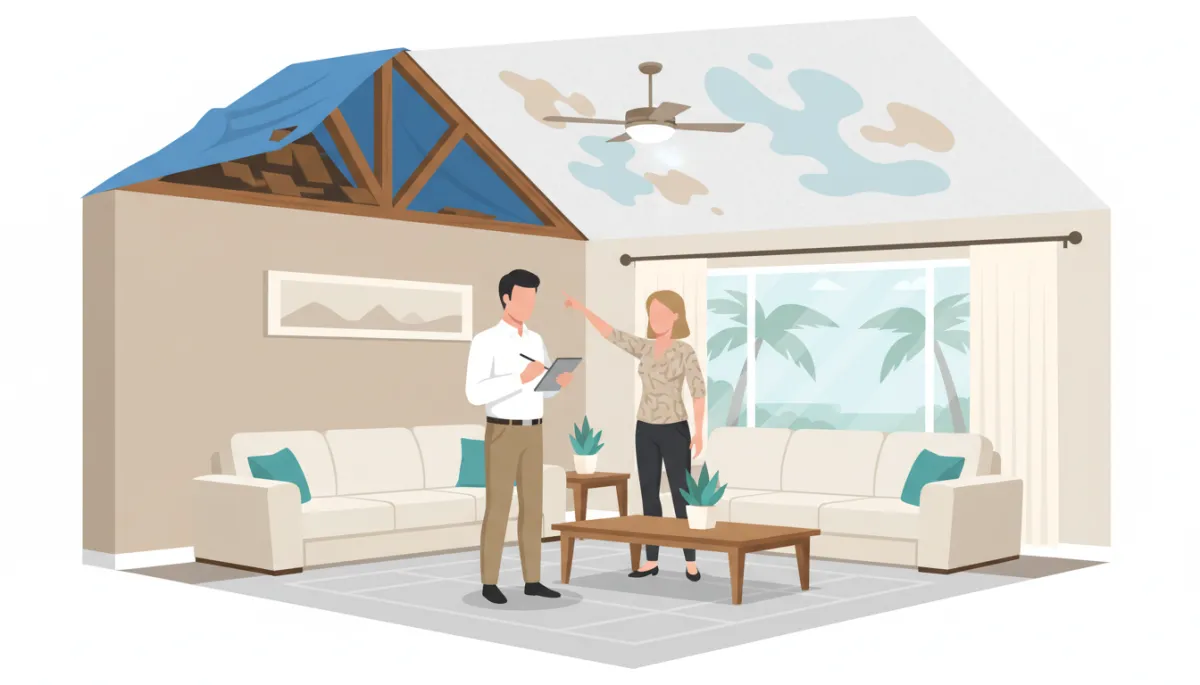
Documenting wind damage early helps your claim move faster and avoids disputes.
What Isn’t Covered: Flood, Storm Surge, and Common Gaps
The most painful surprises after a hurricane often come from misunderstanding flood exclusions. Standard Florida homeowners policies do not cover:
Storm surge that pushes ocean or bay water into your home
Rising water from overflowing lakes, rivers, or canals
Groundwater seeping into your home after heavy rain
All of that is considered flooding and requires a separate flood insurance policy (NFIP or private) with its own deductible (greeneinsurance.com). Many claims get underpaid or denied because the insurer classifies damage as flood when the homeowner assumed it was hurricane wind (reddit.com discussions summarized in the research).
⚠️ Warning: Flood policies usually have a 30‑day waiting period. You can’t buy one when a storm is already heading toward Florida and expect it to apply (walletgrower.com).
How Florida’s Hurricane Deductible Works in 2026
Florida has special rules for hurricane deductibles that are different from your regular “all‑other‑perils” deductible. By law (Florida Statute 627.701), insurers must offer specific options, typically:
A flat $500 deductible for some homes between $100,000 and $249,999 in value
Percentage deductibles of 2%, 5%, or 10% of your dwelling coverage limit (greeneinsurance.com)
That percentage is applied to the insured value of your home, not the amount of damage. For example (insuranceleadsflorida.com, latentinsure.com):
On a $300,000 home, a 2% hurricane deductible is $6,000; 5% is $15,000; 10% is $30,000.
On a $400,000 home, 2% is $8,000; 5% is $20,000; 10% is $40,000.
💡 Pro Tip: A higher hurricane deductible usually means lower premiums—often 10–20% savings when moving from 2% to 5%, and up to 40% at 10%—but you must be sure you can actually afford that out‑of‑pocket cost if your home is hit (insuranceleadsflorida.com, latentinsure.com).
When Does the Hurricane Deductible Apply?
The hurricane deductible doesn’t apply to every windy day. It’s triggered only during an officially declared hurricane event. According to livecovered.com, that window:
Begins when the National Hurricane Center issues a hurricane watch or warning for any part of Florida
Ends 72 hours after the last watch or warning is lifted
Damage from wind within that window taps your hurricane deductible. Wind damage outside that timeframe uses your standard, usually lower, all‑other‑perils deductible (livecovered.com, greeneinsurance.com).
Once Per Year, Not Per Storm
Another Florida‑specific rule that helps consumers: the hurricane deductible applies once per calendar year. If you pay it for the first hurricane of the season, any later hurricane damage that year is generally subject to your regular deductible instead (greeneinsurance.com). The calendar year runs from January 1 through December 31.
2026 Market Changes: Citizens, Private Insurers, and Rates
After years of painful premium hikes, 2026 has finally brought some good news. Thanks to legal reforms that cut back on lawsuits and roofing scams, along with new insurers entering the market, rates are starting to stabilize or even decline (latentinsure.com, axios.com).
Citizens Property Insurance—the state‑backed “insurer of last resort”—received approval for an average 8–9% statewide rate decrease, with reductions over 10% in some South Florida counties (flgov.com, floir.gov).
Citizens has shed hundreds of thousands of policies as private insurers take on more risk, especially in areas like Tampa Bay and Southeast Florida (axios.com). That means more Floridians are back in the private market, often with more coverage options.
Even with these improvements, premiums remain high—commonly $3,800–$6,000 per year for a $300,000 home, and far more in high‑risk coastal zones (latentinsure.com). Choosing the right hurricane deductible and shopping around can make a meaningful difference in your annual costs.
Special Rules If You’re Insured with Citizens
If your policy is with Citizens, pay close attention to flood insurance requirements. Starting January 1, 2026, homes insured for more than $400,000 must carry flood insurance to keep their wind coverage. By January 1, 2027, this requirement will apply to all Citizens personal residential policyholders with wind coverage, regardless of value or flood zone (walletgrower.com).
In other words, if you rely on Citizens for hurricane wind coverage, you will soon have to carry flood insurance as well, even if your mortgage company doesn’t require it. That’s another clear sign that Florida regulators see wind and flood as two halves of true hurricane protection.
How to Prepare Your Coverage Before the Next Hurricane Season
Knowing that home insurance does cover hurricane wind damage—but not flood—your next step is to make sure your coverage lines up with your real‑world risk and budget. Here’s a simple checklist:
Read your declarations page
Confirm your hurricane deductible percentage, your dwelling limit, and whether any exclusions or endorsements apply. If you’re not sure what you’re looking at, ask your agent to walk you through it (floridacoverageguide.com).Match your deductible to your savings
A 5% or 10% deductible can slash your premium, but could mean $20,000–$40,000 out of pocket on a $400,000 home. Choose a level you could realistically pay from emergency savings without jeopardizing your finances (latentinsure.com).Buy or update flood insurance early
Because of the 30‑day waiting period, you’ll want flood coverage in place well before June 1, the official start of hurricane season (walletgrower.com). Consider both NFIP and private options; private policies may offer higher limits or additional features.Check for mitigation credits
Features like impact‑resistant windows, reinforced garage doors, and roof tie‑downs can earn you premium discounts. Programs such as My Safe Florida Home help fund upgrades and may improve both safety and insurability (dcspia.com).Act before binding moratoriums
Many insurers temporarily stop writing new policies or making changes once a storm is forecast to threaten Florida. By late May, some carriers already have restrictions in place (smaartinsurance.com). Don’t wait until a named storm appears on the map to fix coverage gaps.
Final Thoughts: Are You Really Covered for a Florida Hurricane?
In Florida, the question isn’t whether a hurricane will come—it’s when. The good news is that standard homeowners insurance does cover a wide range of hurricane‑related wind damage, from torn‑off roofs to shattered windows and damaged belongings. But that protection comes with strings attached: a separate, often large hurricane deductible and a firm line drawn between wind and flood.
To avoid costly surprises, think of hurricane protection in Florida as a two‑policy solution: homeowners insurance for wind, and flood insurance for rising water. Layer on the right deductible, mitigation upgrades, and an insurer—private or Citizens—that fits your budget, and you’ll be in a much stronger position when the next storm heads toward the peninsula.
Before this hurricane season starts, take an hour to review your coverage, ask questions, and fill any gaps. That small investment of time now can save you months of stress—and tens of thousands of dollars—after the winds die down.
