Why Are Florida Home Insurance Rates Increasing? What Homeowners Need to Know
Why Are Florida Home Insurance Rates Increasing? What Homeowners Need to Know
If you've opened your home insurance renewal notice recently and wondered, "Why did my premium go up again?" you're not alone.
Across Florida, homeowners are experiencing significant increases in their insurance costs. Whether you own a home in Miami, Fort Lauderdale, Boca Raton, Pompano Beach, or anywhere else in the Sunshine State, rising insurance premiums have become a growing concern.
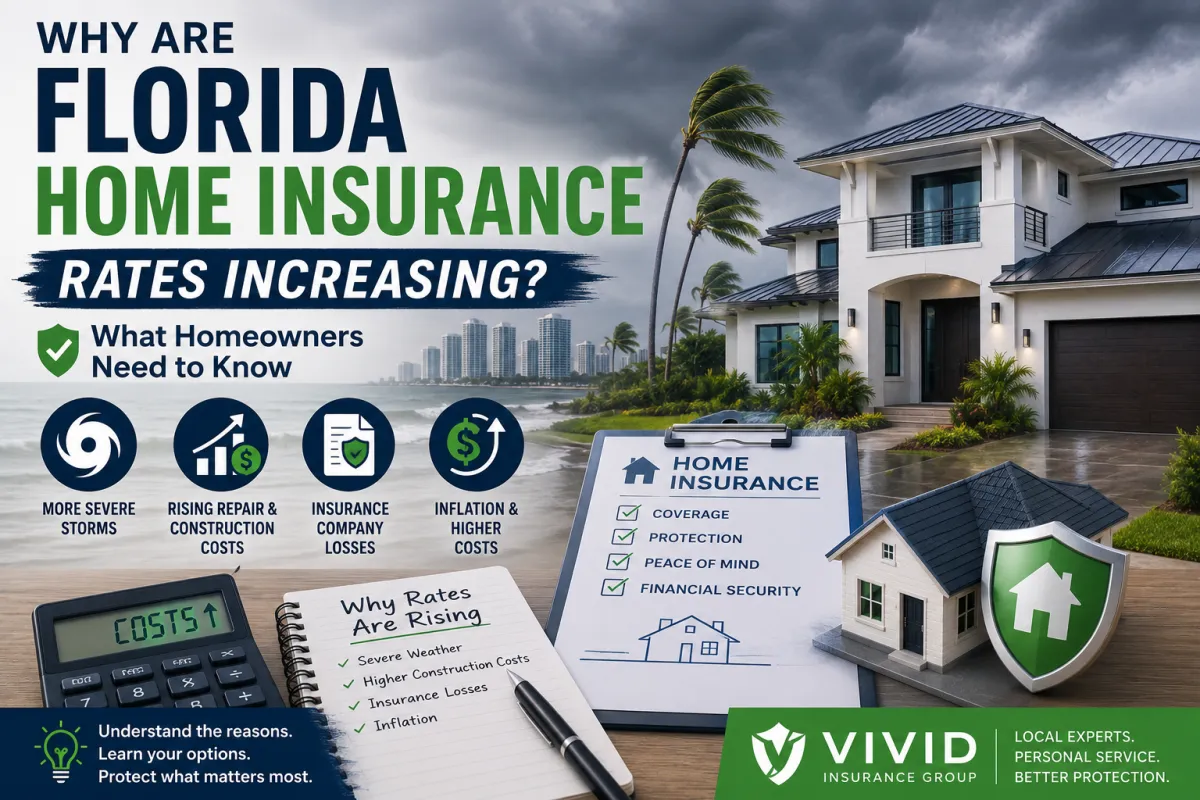
The good news is that these increases aren't random. Several factors are driving higher home insurance costs, including severe weather, rising construction expenses, inflation, insurance company losses, and changes within Florida's insurance market.
Understanding what's causing these increases can help you make smarter decisions about your coverage and potentially identify ways to save money without sacrificing protection.
Quick Answer: Why Are Florida Home Insurance Rates Increasing?
Florida home insurance rates are increasing because of:
✔ More frequent hurricanes and severe weather
✔ Rising construction and repair costs
✔ Inflation and supply chain disruptions
✔ Insurance company losses
✔ Higher reinsurance costs
✔ Increased property values
These factors have made it more expensive for insurance companies to repair, rebuild, and replace homes after losses, resulting in higher premiums for homeowners throughout Florida.
The Impact of Hurricanes and Severe Weather
Florida's location makes it one of the most hurricane-prone states in the country. Every year, homeowners face the possibility of tropical storms, hurricanes, flooding, and strong winds.
When a major hurricane strikes, insurance companies may pay billions of dollars in claims for damaged homes, roofs, personal property, and other losses. Even if your home wasn't directly affected by a storm, widespread claims across the state can influence future insurance rates.
In coastal communities such as Miami, Fort Lauderdale, Boca Raton, and Pompano Beach, the risk is often even higher due to proximity to the ocean and exposure to hurricane-force winds.
Insurance providers carefully evaluate these risks when determining premiums. As severe weather events become more frequent and costly, insurance rates often increase to reflect the growing financial exposure.
Rising Construction and Repair Costs
Another major reason for increasing premiums is the rising cost of repairing and rebuilding homes.
Over the last several years, the price of construction materials has increased significantly. Lumber, roofing materials, drywall, windows, electrical components, and plumbing supplies all cost more than they did just a few years ago.
Labor costs have also risen. Skilled contractors, roofers, electricians, and plumbers are in high demand throughout Florida, particularly after major storms.
When insurance companies pay claims, they must cover these higher repair and rebuilding costs. As a result, homeowners often see higher premiums because insurers need to collect enough revenue to cover future claims.
Even homeowners who never file a claim may be affected because these increased costs impact the entire insurance market.
Insurance Company Losses and Market Changes
Florida's insurance market has experienced significant challenges in recent years.
Several insurance companies have reported substantial losses due to hurricane damage, severe weather events, and rising claim costs. Some companies have reduced the number of policies they write, while others have left the Florida market entirely.
When fewer insurance companies compete for business, homeowners have fewer choices. Reduced competition can contribute to higher premiums because remaining insurers have less pressure to lower prices.
In addition, insurance companies purchase their own protection through a process called reinsurance. Reinsurance helps insurers manage risk after catastrophic events.
Unfortunately, reinsurance costs have also increased dramatically. Those additional expenses are often passed down to homeowners through higher premiums.
How Inflation Affects Home Insurance
Inflation impacts nearly every industry, and insurance is no exception.
When inflation rises, the cost of replacing damaged property also increases. Building materials, transportation, labor, appliances, and household goods become more expensive.
Insurance companies must account for these higher replacement costs when determining how much coverage homeowners need and how much they charge for policies.
As home values and rebuilding costs continue to rise, insurance premiums often follow the same trend.
This is one reason many Florida homeowners have noticed steady increases in their premiums, even if they haven't filed any claims.
Why Florida Homeowners Pay More Than Other States
Florida consistently ranks among the most expensive states for homeowners insurance.
One reason is the state's exposure to hurricanes and tropical storms. Coastal regions face elevated risks that many inland states simply don't experience.
Florida also has a large number of waterfront properties and homes located in areas vulnerable to flooding and wind damage.
Many homes throughout the state are older and may require more expensive repairs after severe weather events.
Additionally, rising property values mean insurance companies must account for higher rebuilding costs. A home that would have cost $250,000 to rebuild several years ago may cost significantly more today.
All of these factors contribute to higher insurance premiums compared to many other parts of the country.
What Homeowners Can Do to Reduce Insurance Costs
While homeowners cannot control hurricanes or inflation, there are several ways to potentially lower insurance costs.
One of the most effective strategies is improving your home's resistance to storm damage. Upgrades such as impact-resistant windows, hurricane shutters, reinforced garage doors, and newer roofing systems may qualify for discounts.
Many insurance companies also offer savings for:
Home security systems
Smoke detectors
Water leak detection devices
Wind mitigation improvements
Newer roofs
Bundling home and auto insurance policies with the same provider may also reduce overall insurance costs.
Shopping around and comparing quotes regularly can be beneficial as well. Different insurance companies evaluate risk differently, meaning premiums can vary significantly for similar coverage.
Common Mistakes Homeowners Make
Many homeowners unintentionally increase their risk or costs by making avoidable mistakes.
One common mistake is choosing the cheapest policy available without reviewing coverage limits and exclusions.
Another mistake is assuming standard homeowners insurance covers flood damage. In most cases, flood insurance must be purchased separately.
Some homeowners also fail to update their policy after making improvements or renovations. If your home's value increases and your coverage isn't updated, you could end up underinsured.
Other common mistakes include:
Not reviewing policies annually
Ignoring available discounts
Failing to compare quotes
Underestimating rebuilding costs
Waiting until renewal time to address concerns
Avoiding these mistakes can help homeowners maintain better protection while managing costs more effectively.
Frequently Asked Questions
Why is home insurance increasing in Florida?
Higher construction costs, inflation, severe weather events, insurance company losses, and rising reinsurance expenses are all contributing to higher premiums.
Does standard homeowners insurance cover flood damage?
No. Flood insurance is typically purchased separately from standard homeowners insurance policies.
Can a new roof lower my insurance premium?
In many cases, yes. Newer roofs and wind-resistant features may qualify homeowners for discounts.
Is it worth comparing quotes every year?
Absolutely. Insurance rates change frequently, and comparing options can help you find better pricing or improved coverage.
How can I lower my home insurance costs?
Improving home safety features, increasing deductibles, bundling policies, reviewing coverage annually, and comparing quotes can all help reduce costs.
Final Thoughts
Home insurance rates in Florida have increased for many homeowners, but understanding the reasons behind those increases can help you make informed decisions about your coverage.
From hurricanes and severe weather to inflation and rising construction costs, several factors continue to influence what Florida homeowners pay for insurance.
While some of these challenges are beyond your control, taking proactive steps such as improving your home's safety features, reviewing your policy regularly, and comparing coverage options can help you manage costs and maintain strong protection.
If you live in Miami, Fort Lauderdale, Boca Raton, Pompano Beach, or anywhere else in Florida, Vivid Insurance Group is here to help. Our team can review your current coverage, answer your questions, and help you find a policy that fits both your needs and budget.
Contact Vivid Insurance Group today for a free home insurance review and personalized quote. Protecting your home starts with understanding your options, and we're here to help every step of the way.
